What Is Currency Risk in China Sourcing?
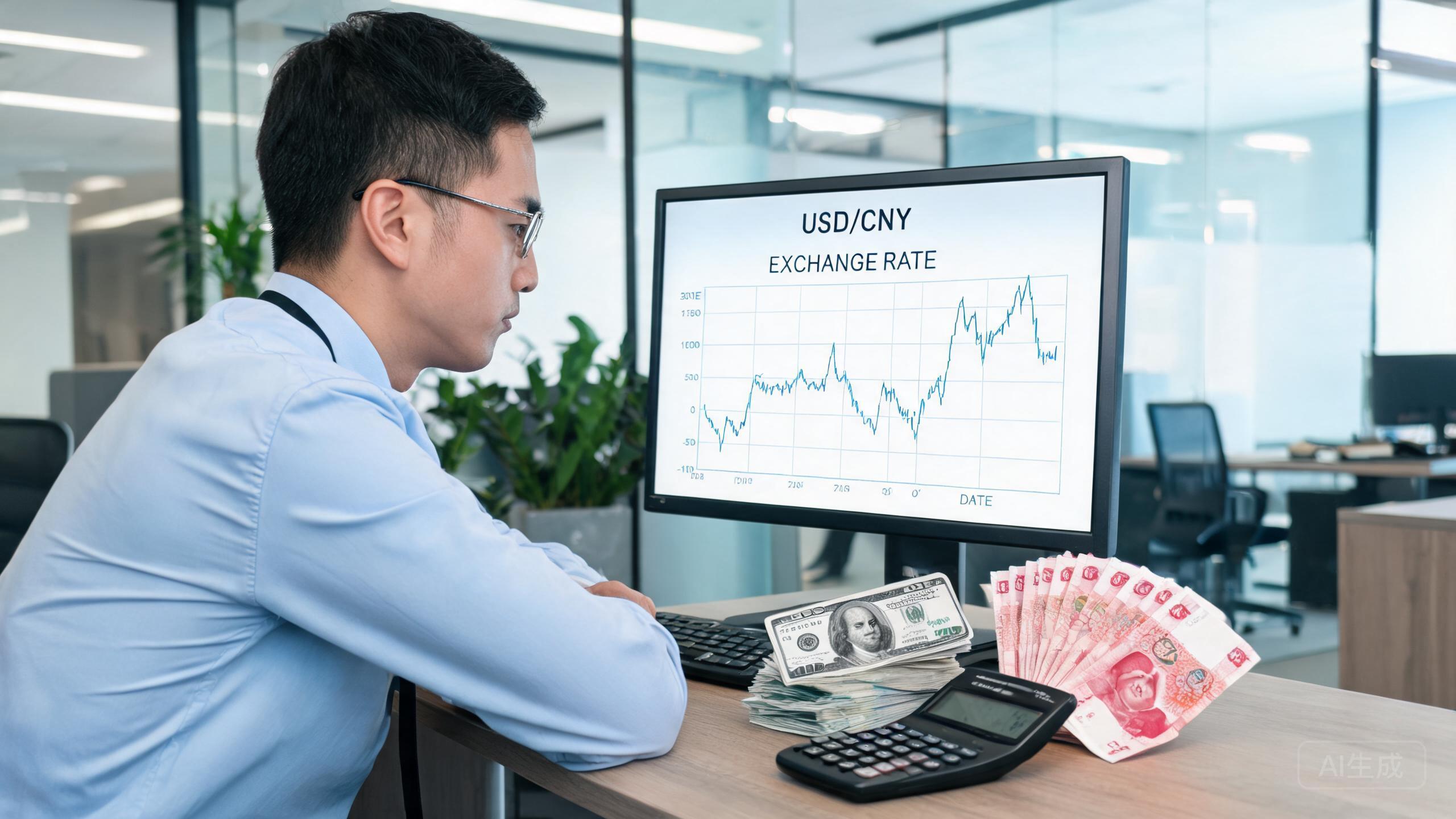
Currency risk (FX risk) in China sourcing is the chance that the exchange rate between your payment currency (usually USD) and the supplier's cost currency (RMB) moves against you between the day the supplier quotes and the day you pay. Because Chinese factories incur most costs in RMB (labor, materials, rent) but often quote in USD, the rate you lock in at quote time can differ significantly from the rate at payment time. A 5% adverse move on a six-figure order can erase an entire profit margin. Managing this risk — through quote-currency choice, natural hedging, multi-currency accounts, or forward contracts — is a core part of profitable China sourcing.
USD/RMB Volatility: How Much Can It Move?
The USD/RMB rate is managed by China's central bank (PBOC) within a band, but it still moves meaningfully year to year. Recent annual ranges:
| Period | USD/RMB Range | Annual Swing | Impact on $100k Order |
|---|---|---|---|
| 2022 | 6.31 – 7.32 | ~16% | ±$16,000 |
| 2023 | 6.70 – 7.35 | ~9% | ±$9,000 |
| 2024 | 7.10 – 7.28 | ~3% | ±$3,000 |
| 2025 (YTD) | 7.10 – 7.25 | ~2% | ±$2,000 |
| Typical annual | — | 3–8% | ±$3,000–$8,000 |
Even in a "stable" year, a 3% move on a large order is enough to wipe out a thin retail margin. The longer the gap between quote and payment (production lead time + shipping), the larger the exposure.
Hedging Methods Compared
| Method | Cost | Complexity | Protection | Best For |
|---|---|---|---|---|
| Natural hedging | Free | Low | Full (USD in / USD out) | Amazon FBA / USD-revenue sellers |
| Multi-currency account (Wise, XTransfer, Payoneer) | 0.3–1% FX spread | Low | Avoids home-bank spread | All buyers paying in USD/EUR/GBP |
| Forward contract | 0.1–0.5% | Medium (bank setup) | Locks rate 1–12 months | RMB-quoted orders >$50k |
| USD quote from supplier | 2–5% markup (built in) | Low | Transfers risk to supplier | Small/medium orders, simple |
| Self-insure (no hedge) | 0 | Low | None | Orders <$10k, short lead times |
Pay in USD or RMB?
The single biggest decision is which currency the PI is denominated in:
- USD quote: the supplier bears the USD/RMB risk and usually adds a 2–5% buffer to the unit price to protect themselves. You know your exact cost upfront, but you pay a small premium for certainty.
- RMB quote: you get the supplier's real cost (often 2–5% cheaper than their USD quote), but you must convert USD→RMB at payment and bear the FX risk. On a large order, hedge the RMB exposure with a forward contract.
For orders under $50,000, the USD quote's built-in premium is usually cheaper than setting up a forward. Above $50,000, ask for both quotes and compare the RMB price + forward cost against the USD price.
Natural Hedging: The Free Option
If your business earns revenue in USD (most Amazon FBA sellers, US wholesalers, many e-commerce sellers), the simplest hedge is to pay USD supplier invoices directly from your USD balance. No conversion happens, so there is no FX risk and no conversion fee. This is called natural hedging — matching the currency of your costs to the currency of your revenue. Use a multi-currency account (Wise, Payoneer, or a XTransfer USD balance) to hold USD and pay in USD. For EUR or GBP sellers, the same logic applies: hold EUR/GBP and pay EUR/GBP invoices. The only time you face conversion is when the supplier insists on RMB — which is when forward contracts come in.
Worked Example: $100,000 Order Quoted in RMB
A factory quotes an OEM order at 720,000 RMB. At the quote date the USD/RMB rate is 7.20, so the order is worth $100,000. Production takes 75 days. Two scenarios at the balance payment date:
- Scenario A — RMB appreciates to 6.90: 720,000 ÷ 6.90 = $104,348. Your cost rose $4,348 (4.3%) through no fault of the supplier.
- Scenario B — RMB depreciates to 7.50: 720,000 ÷ 7.50 = $96,000. Your cost fell $4,000.
If you had booked a forward contract at 7.20 for the 720,000 RMB payable in 75 days (cost ~0.3% = $300), you would pay exactly $100,000 in both scenarios — locking in your margin. The $300 hedge cost is far cheaper than the $4,348 downside risk.
When to Hedge
- Order value over $50,000 — a 3–8% swing becomes a material number.
- Lead time over 60 days — more time = more opportunity for the rate to move.
- Supplier quotes in RMB with a long gap between quote and payment.
- Thin margins (under 15%) where a 5% cost increase turns profit into loss.
Do not hedge orders under ~$10,000 or very short lead times — the forward contract setup cost and bank paperwork usually exceed the maximum possible loss.
How Yeatru Handles Currency Risk
Yeatru helps buyers manage FX exposure as part of every large order:
- Requests both USD and RMB quotes so you can compare the real cost.
- Advises on whether to self-insure, use natural hedging, or book a forward based on order size and lead time.
- Routes USD payments through XTransfer or multi-currency accounts to avoid home-bank conversion spreads.
- Builds FX sensitivity into your landed cost calculation so margin is stress-tested at ±5% rate moves.
Frequently Asked Questions
1. How does currency risk affect China sourcing?
If your supplier quotes in RMB and you pay in USD, a 3–8% yearly USD/RMB fluctuation can change your cost by thousands of dollars between the quote date and payment date. For example, a 720,000 RMB order quoted at 7.20 costs $100,000; if the rate moves to 6.90 at payment, it costs $104,348 — a $4,348 unplanned increase.
2. How much does a forward contract cost?
A bank forward contract to lock the USD/RMB rate for 1–12 months typically costs 0.1–0.5% of the notional amount, sometimes built into the forward rate rather than charged as a separate fee. On a $100,000 order that is $100–$500 — cheap insurance against a 3–8% adverse swing.
3. Should I pay Chinese suppliers in USD or RMB?
Paying in USD transfers the FX risk to the supplier, but many suppliers mark up the USD price by 2–5% to cover their own risk. Paying in RMB often gets you a better unit price but you bear the USD/RMB risk. For orders under $50k or short lead times, USD is simpler; for large RMB quotes, consider hedging with a forward contract.
4. What is natural hedging?
Natural hedging means matching your revenue currency to your cost currency so no conversion is needed. For example, if you sell on Amazon FBA and earn USD, pay your Chinese supplier's USD invoice directly from your USD balance — you eliminate FX risk and conversion fees without any financial instrument.
5. When should I hedge currency risk on China orders?
Hedge when the order is over $50,000, the lead time is over 60 days, or the supplier quotes in RMB with a long gap between quote and payment. A 3–8% swing on a large order can wipe out your margin. For small orders under $10k, the hedging cost often exceeds the risk, so self-insure.
6. What multi-currency accounts work for China sourcing?
Wise, XTransfer, and Payoneer let you hold USD, EUR, GBP, and other currencies and pay suppliers in their quoted currency. This avoids your home bank's 2–4% conversion spread and makes natural hedging easy. For very large amounts, a corporate USD account with your bank offers the best rates.
Common Pitfalls to Avoid
- Wiring to a personal account instead of the company account. Always confirm the PI beneficiary name matches the supplier's business license. A personal account = red flag for fraud or tax evasion, and you lose all payment protection.
- No bank-detail re-verification before the balance transfer. Hackers infiltrate supplier email and send a 'new account' notice mid-order. Re-confirm bank details by phone or WeChat call before every wire over $5,000.
- Paying 100% upfront without a QC gate. Structure 30/70 or 50/50 with an AQL 2.5 pre-shipment inspection before the balance. Once the full amount is paid, you have zero leverage over defects.
- Ignoring SWIFT cost-sharing (SHA vs OUR). SHA splits fees ($25–$45 total) but the supplier receives $15–$25 less. OUR costs you ~$55–$60 upfront but guarantees the full amount arrives. For deposits over $10k, OUR avoids short-payment disputes.
- No written payment terms in the contract. Specify due dates, currency, bank charges, and late-payment penalties. Verbal agreements are unenforceable in Chinese courts.
Conclusion
Currency risk is a silent margin killer in China sourcing — a 3–8% USD/RMB swing on a large order can erase profits before the goods even ship. The good news is that the defenses are cheap and simple: use natural hedging (USD in, USD out) whenever possible, hold funds in a multi-currency account to avoid bank conversion spreads, and for large RMB-quoted orders over $50k, book a forward contract for 0.1–0.5%. Contact Yeatru to build FX sensitivity into your next order's landed cost and decide whether hedging is worth it for your margins. Related: 50/50 deposit payment terms.