What Is a Sourcing Agent?
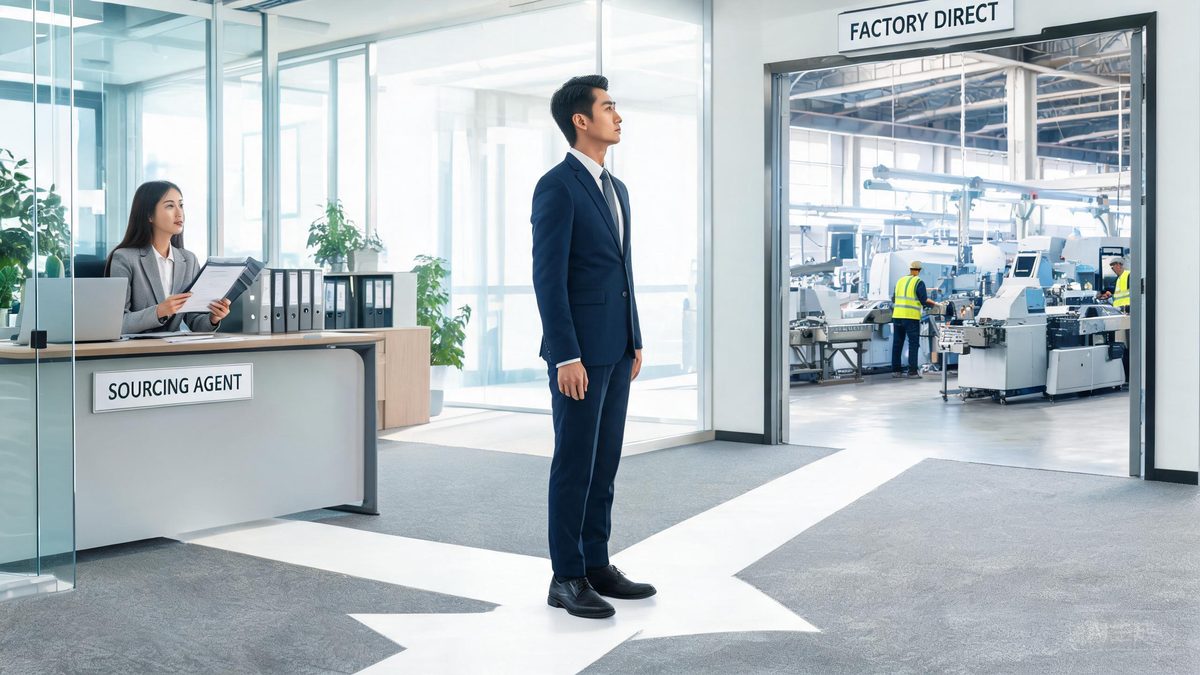
A China sourcing agent is an on-the-ground professional in a sourcing hub (Yiwu, Guangzhou, Shenzhen, Ningbo, or Foshan) who represents a foreign buyer — not a Chinese factory — and manages the end-to-end import workflow: supplier search and vetting, RFQ and price negotiation, sample management, factory audit, in-process and pre-shipment AQL 2.5 quality control, OEM/private-label coordination, contract and NDA, payment escrow, FBA prep, export documentation, and door-to-door DDP logistics. The agent is paid a transparent fee — typically 3–8% of order value — and discloses the real factory name, registered capital, and business license number. Unlike a trading company, which buys stock from a factory, marks up the unit price, and ships under its own invoice, a sourcing agent lets you pay the factory directly and only charges for the service layer. The market distinction matters because an agent's incentive is to negotiate the price down; a trading company's incentive is to mark it up.
Why Use a Sourcing Agent in 2026?
Three structural shifts since 2024 have made on-the-ground representation more valuable, not less:
- Section 301 tariffs widened. EVs hit 100%, semiconductors 50%, solar 50%, and lithium batteries 25% in the 2024 Biden review (phasing through 2026). Correct HS-code classification now decides whether you pay 0% or 25% extra duty — and only an agent with a customs broker on retainer can model that before you commit to a supplier. See our 2026 Section 301 guide.
- De minimis ended. The $800 US de minimis exemption closed in 2025, so every commercial parcel now needs formal entry, duty, and MPF/HMF — even 100-piece TikTok test orders. An agent who consolidates SKUs into one DDP shipment cuts per-unit clearance cost dramatically.
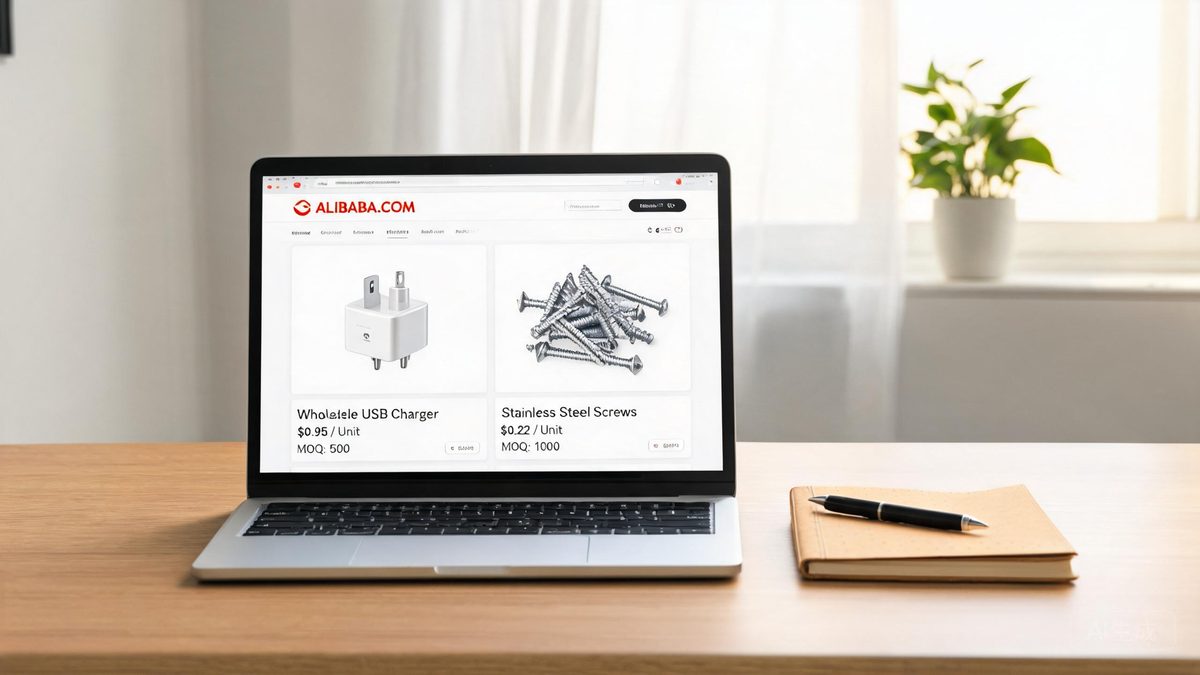
- Alibaba is no longer a sourcing tool, it is a quoting tool. Verified Supplier and Trade Assurance badges have been gamed for years; a 2025 review of 1,200 "gold supplier" accounts found 38% had no verifiable production capacity. An agent physically walks the floor — something no overseas buyer can do at scale.
What Does a Sourcing Agent Do?
A full-service China sourcing agent runs ten interconnected services across the import lifecycle. Each one alone can save or cost more than the agent's entire fee.
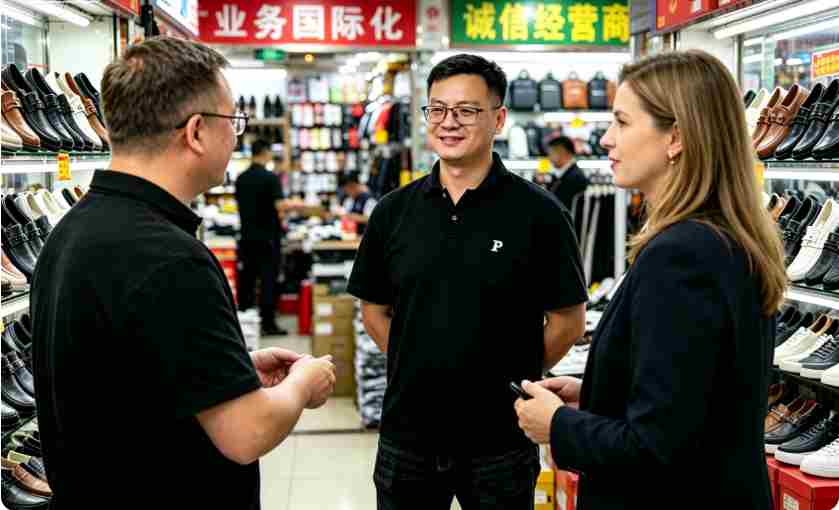
- Supplier discovery. Beyond Alibaba (where anyone can list), agents tap Yiwu International Trade City (75,000+ booths), 1688.com (the domestic-only wholesale platform — much lower MOQs and ~30% lower prices than Alibaba), the Canton Fair (25,000+ exhibitors, twice a year), and private factory databases built from years of category work. See our Yiwu market guide.
- Factory verification — pulling the Chinese business license (营业执照) on the National Enterprise Credit Information Publicity System (gsxt.gov.cn), checking registered capital (¥500k+ for a real factory), verifying the business scope lists 制造 (manufacturing) not just 贸易 (trading), and physically walking the floor to confirm the equipment, workforce, and capacity match the claims. This is the single step that prevents the most fraud — see how to verify a Chinese supplier license.
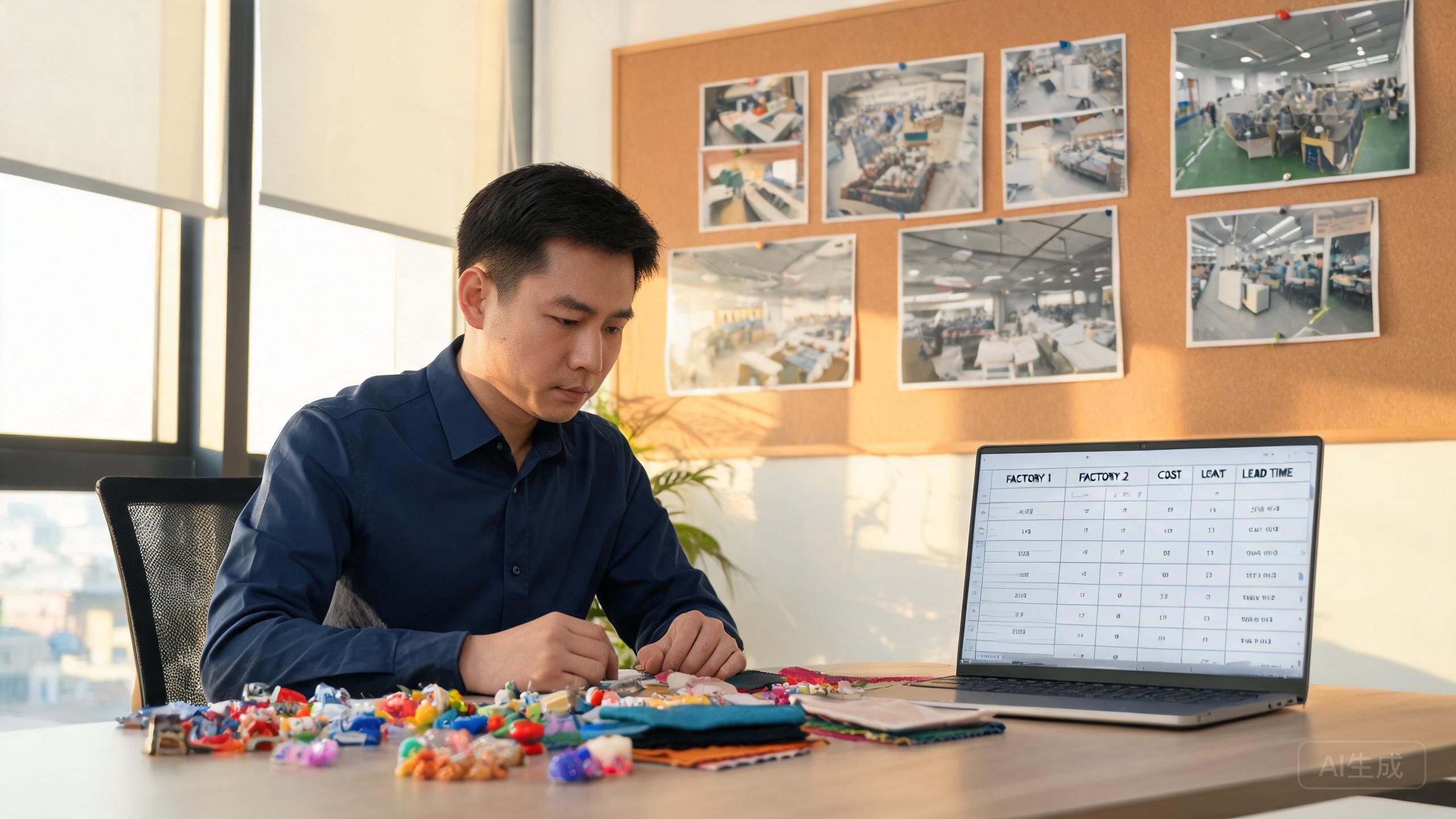
- Price negotiation — using volume commitments, payment terms (50/50 instead of 100% upfront), multi-supplier competitive RFQs (3 quotes minimum), and local market intelligence on raw-material trends to drive ex-factory prices down. A Yiwu agent knows the going rate for a 5,000-piece silicone order to the cent; an overseas buyer is always quoted the "foreigner price" first.
- Quality control inspection — AQL 2.5 pre-shipment inspection on a statistical sample (general inspection level II, AQL 2.5 for major defects, 4.0 for minor), with a written 4-page report including 30+ photos and 1-minute video, and the right to reject the batch before the balance is paid. This is the only step that catches defects while you still have leverage.
- OEM / private label — custom mold sourcing (typical mold cost: $1,500–$8,000 depending on complexity), brand printing (pad print, silk screen, heat transfer, or UV print), custom packaging design, FBA-compliant polybag and FNSKU labeling, and IP protection via NDA + mold-ownership clause registered to the buyer.
- Sample management. Ordering 1–3 samples from each shortlisted supplier ($20–$100 each, 3–7 days by express), conducting a 12-point physical inspection (dimensions, weight, finish, color match, drop test, packaging, label accuracy), and photographing against a benchmark before approving bulk.
- Production follow-up. Weekly or daily WeChat updates with factory photos at three checkpoints: pre-production (raw materials staged), mid-production (10–30% off the line), and pre-shipment (100% packed). Catches schedule slips 2–3 weeks before they hit your shipping window.
- Export documentation. Commercial invoice, packing list, bill of lading (or air waybill), certificate of origin (Form A, Form E for ASEAN, or RCEP), Fumigation/Heat Treatment Certificate (for wooden packaging), and dangerous-goods declaration for batteries, aerosols, or liquids.
- International logistics — booking sea freight (FCL or LCL), air freight, or express courier, with the option of DDP (Delivered Duty Paid) shipping where the agent handles export, freight, US customs clearance, duty, and last-mile delivery — one landed price, one contact.
- After-sales support. Handling defects, replacements, or rework if quality issues surface 30–90 days post-delivery. A professional agent carries a 1–2% defect allowance budget and processes claims on your behalf without making you renegotiate with a factory that has already been paid.
Types of Sourcing Agents
Sourcing agents offer different fee structures to match your business model:
| Type | Fee Model | Best For | Pros | Cons |
|---|---|---|---|---|
| Fixed-fee agent | $150–$500 per order | Small to medium orders (<$5,000) | Predictable cost; no incentive to inflate prices | May not negotiate as aggressively |
| Commission agent | 3–8% of order value | Regular volume buyers | Motivated to get best price; no upfront cost | Higher % on large orders |
| Hybrid model | Small retainer + 2–4% commission | Long-term monthly buyers | Dedicated account manager; preferential rates | Ongoing cost commitment |
| Specialized agent | Premium 8–12% | Highly regulated categories (electronics cosmetics medical) | Category expertise; compliance support | More expensive; limited industry coverage |
How Much Does a Sourcing Agent Cost?
Agent fees are one of the most common questions we receive. Here is a clear breakdown:
Commission-Based Fees (Most Common)
- Budget buyers ($1,000–$5,000): 6–8% commission minimum $100
- Growing businesses ($5,000–$20,000): 4–6% commission
- Wholesale / bulk ($20,000+): 3–4% commission negotiable
Worked Example: 1,000-Unit Cotton Tote Order, Yiwu → LAX9
Below is a real 2025 client order — 1,000 pieces of a custom-printed 10 oz cotton tote bag, sourced from a Yiwu-area factory, FBA-prepped and DDP-shipped to Amazon's LAX9 fulfillment center. The agent fee is 5% commission.
| Cost Component | Without Agent | With Agent (5%) | Difference |
|---|---|---|---|
| EXW unit price (factory-direct quote to overseas buyer) | $2.20 | $1.78 | -$0.42 / unit |
| EXW total (1,000 units) | $2,200 | $1,780 | -$420 |
| FNSKU labeling + suffocation polybag (China-side FBA prep) | $0.35 / unit = $350 | $0.18 / unit = $180 | -$170 |
| Carton packing (50 cartons, ≤50 lb) | $60 | $25 | -$35 |
| Sea DDP freight (0.6 CBM, Yiwu → LAX9) | $520 (CIF quote + broker + trucking) | $360 (consolidated DDP) | -$160 |
| US duty (HTS 4202.92, MFN 6.5%, no Section 301) | $143 | $116 | -$27 |
| Pre-shipment AQL 2.5 inspection | $0 (skipped) | $130 | +$130 |
| Defect rework cost (5% defect rate × $1.50 rework) | $75 (likely) | $15 (1% rate after AQL) | -$60 |
| Subtotal before agent fee | $3,348 | $2,606 | -$742 |
| Agent commission (5% of EXW + prep) | $0 | $98 | +$98 |
| Total landed cost | $3,348 | $2,704 | -$644 (-19.2%) |
| Per unit landed | $3.35 | $2.70 | -$0.64 |
Net result: $644 saved on a 1,000-unit order after the agent's $98 fee, a 19.2% landed-cost reduction. The savings come from three places: factory-direct pricing (the agent's quote was 19% below the "foreigner quote"), tighter QC that cut defect rate from 5% to 1%, and consolidated DDP shipping that beat the factory's CIF quote + a separate US broker + trucking. On a 10,000-unit reorder, the per-unit gap widens further because the agent's 3% tier-2 commission (not 5%) and FCL sea freight both kick in.
Hidden costs to avoid: setup fees ($50–$200 per supplier), per-quote fees ($10–$25 each), "express processing" surcharges ($30–$80), and double-charging on QC (some agents bill both the buyer AND receive a kickback from the factory for "passing" the inspection). Demand one all-inclusive fee in writing — and ask directly: "Do you accept kickbacks from factories?" A reputable agent will say no and offer to let you pay the factory separately.
When to Choose a Sourcing Agent vs Buying Direct
You can buy directly from suppliers on Alibaba. But consider these factors:
| Factor | Using an Agent | Buying Direct |
|---|---|---|
| Time investment | 5–10 hours total | 20–40+ hours of messaging and negotiation |
| Language barrier | Agent handles all Chinese communication | Google Translate; misunderstandings common |
| Factory verification | Agent visits factory in person | You rely on supplier's online profile |
| Quality control | Local inspector on-site | Photos/videos from supplier (may be misleading) |
| Problem resolution | Agent mediates locally | You compete on Alibaba's complaint process |
| Cost | 3–8% fee on order value | No agent fee but higher risk of overpaying |
If your order is under $500 and you are testing one simple product buying direct may be fine. For anything larger — or if compliance quality and consistency matter — an agent is the safer and more cost-effective choice.
How to Choose the Right Sourcing Agent (7 Steps)
- Define your product clearly — know your MOQ target price range quality standards and shipping timeline
- Check their legal entity — ask for a business license and verify it on the Chinese government business registry
- Confirm on-the-ground presence — they should have an office or team in Yiwu Guangzhou or Shenzhen — not just a mailbox
- Ask for client references — 3 recent clients in your product category with contact details
- Compare fee structures — get written quotes from 2–3 agents and compare all-inclusive costs
- Test communication — email message on WhatsApp or WeChat and call them. If they take 3 days to reply they will be slow during production
- Run a trial order — start small ($500–$2,000) before committing to larger volumes
Red Flags to Avoid
- Agent refuses to show their business license or physical office address
- Fees exceed 10% or are structured with multiple hidden charges
- They cannot provide references in your product category
- Communication is only through a messaging app — no email no phone no video call
- They push you toward one specific supplier immediately without showing alternatives
- They claim to be a "direct factory" but also offer sourcing agency services — decide whether you need a factory or an agent
- Payment requested in full upfront before any supplier work begins
Sourcing Agent by Business Model
Different business models have different sourcing needs. A good agent tailors the service stack accordingly — the worst fit is a wholesale-focused agent running TikTok Shop orders with the same playbook.
| Business Model | Typical MOQ | Lead Time | Critical Agent Services | Common Pitfall Without Agent |
|---|---|---|---|---|
| TikTok Shop / Shopify seller | 100–500 pcs | 7–15 days production + 5–9 days air DDP | Low-MOQ supplier vetting, trend-matched product research, fast-sample coordination, TikTok-compliant packaging, air DDP consolidation | Alibaba MOQ 500–1,000 kills the trend cycle; 30-day sea freight misses the entire viral window |
| Amazon FBA seller | 500–5,000 pcs | 20–40 days + 25–45 days sea | FBA-compliant prep (FNSKU, suffocation polybag, ISTA 6-Amazon carton, ≤50 lb), HS-code + Section 301 modeling, AQL 2.5 pre-shipment QC, DDP-to-FC | Non-compliant inbound triggers $0.50–$2.00/unit return fees; wrong HTS code triggers 25% retroactive duty |
| Wholesale / distributor | 10,000–100,000 pcs | 45–90 days, FCL sea | Multi-factory consolidation, container load planning, FCL freight bidding, batch consistency QC across lots, long-term contract negotiation | Multiple LCL shipments cost 30–60% more per CBM than FCL; batch-to-batch quality drift erodes brand trust |
| Brand / private label | 1,000–10,000 pcs | 30–60 days + mold 15–30 days | Mold sourcing & ownership, NDA + IP registration, custom packaging, pre-production sample approval, design-for-manufacturing feedback | Without mold-ownership clause, the factory reuses your tooling for a competitor; without IP registration, your design is copied within 60 days |
| Regulated products (cosmetics, food, electronics, toys) | 500–5,000 pcs | 30–60 days + cert 20–40 days | Certificate collection (FCC, CE, CPC, FDA), compliance label review, third-party lab testing coordination, regulatory pre-screen | Amazon gatekeeping blocks non-compliant ASINs at listing; CBP seizes non-FCC electronics at the border |
Frequently Asked Questions
1. Is a sourcing agent the same as a freight forwarder?
No. A sourcing agent manages the product sourcing side — finding factories negotiation QC OEM. A freight forwarder manages the shipping side — booking containers customs clearance last-mile delivery. Some agents like Yeatru offer both services under one roof for convenience.
2. How much does a sourcing agent save me?
Good agents typically negotiate 15–30% lower ex-factory prices than what you would get messaging suppliers directly. The savings usually exceed their fee many times over.
3. Do I need a sourcing agent if I already found a supplier on Alibaba?
Yes an agent can still help. They can verify the supplier's legitimacy (via our supplier verification process) negotiate a better price run pre-shipment QC and handle export documentation. Many buyers use agents even when they already have a supplier contact.
4. Can a sourcing agent work with me remotely?
Absolutely. Most agent relationships are conducted entirely online — email WhatsApp WeChat and video calls. The key benefit is that the agent is physically in China and can visit factories on your behalf.
5. What if my order is very small ($200–$500)?
Some agents charge a minimum fee ($50–$150) for small orders. For very small test orders you may prefer to buy direct first. But if you plan to reorder establishing a relationship with an agent early is worthwhile.
6. How long does the sourcing process take?
For an existing product you want to import: 5–15 days from RFQ to confirmed supplier. For custom/OEM products: 20–40 days including sample approval. Production itself takes 15–60 days depending on quantity and complexity.
7. Do sourcing agents handle customs and import duties?
Many agents offer DDP (Delivered Duty Paid) shipping which means they handle export clearance in China and pay import duties and taxes on your behalf. You pay one landed price and receive the goods at your door.
8. Can I trust a sourcing agent I found online?
As with any service provider do your due diligence. Check their business license ask for references and start with a small trial order — also read our low-MOQ sourcing guide. Established agents like Yeatru have been in business since 2013 and have public client testimonials.
9. What payment methods do sourcing agents use?
Most accept bank transfer (T/T) sometimes Western Union or XTransfer. Reputable agents will provide a formal invoice and never ask for payments to personal accounts.
10. Do I still need to visit China if I use a sourcing agent?
No. A good agent eliminates the need to travel. But if your order exceeds $50,000 or you are developing a new custom product and OEM development a 3–5 day visit to meet the factory in person is still valuable.
Common Pitfalls to Avoid
- Choosing the cheapest agent without due diligence. Commission below 2% is usually subsidized by factory kickbacks or hidden markups — you pay more in inflated goods cost. A real 3–8% fee with transparency costs less.
- Not verifying the business license. Look up the agent on gsxt.gov.cn (National Enterprise Credit Information). Confirm the business scope lists 代理 (agency), registered capital $50k+, and no abnormal operation status.
- No 3 client references in your category. Ask for 3 buyers who sourced a similar product in the last 6 months and actually call them. Verify delivery, defect rate, and fee transparency.
- Refusing to share the factory name. A reputable agent discloses the factory and lets you pay the factory directly. An agent that hides the factory is marking up the goods price, not just charging a fee.
- No contract with QC and defect-liability terms. Sign an agreement covering NDA, IP protection, QC pass criteria (AQL level), and who pays for rework. A handshake deal leaves you with no recourse.
Conclusion
A China sourcing agent is your local expert who navigates the complexities of importing for you. They save you time money and risk. The investment — typically 3–8% of your order value — is recouped through better pricing verified factories and consistent quality. Before you place your next order from China consider speaking with an agent to see how they can help. A free consultation and quote take under 24 hours. (already read our guide? See our complete guide for next steps). Related: how to choose a sourcing agent, sourcing agent fees.