Why Use a China Sourcing Agent?
Importing from China directly is technically possible — but it is hard to do well. You face an 8-hour time-zone gap, a market of an estimated 300,000+ registered factories, Mandarin-language negotiation, and the constant risk of quality surprises or outright scams. A China sourcing agent solves this by being your on-the-ground local partner: they live in China, speak the language, know the factories personally and work entirely in your interest — not the factory's.
The economic case is straightforward. Independent 2025 buyer-survey data show agents deliver 12–28% net savings after their fee, sourced from three places: (1) factory-direct ex-works pricing with no trading-company markup, (2) AQL 2.5 quality control that catches defects before the goods leave China — avoiding the 3–5x cost of reworking or replacing defective stock in your destination market, and (3) consolidated DDP shipping that beats piecemeal LCL freight on small parcels. For most product lines, the agent fee pays for itself on the first order.
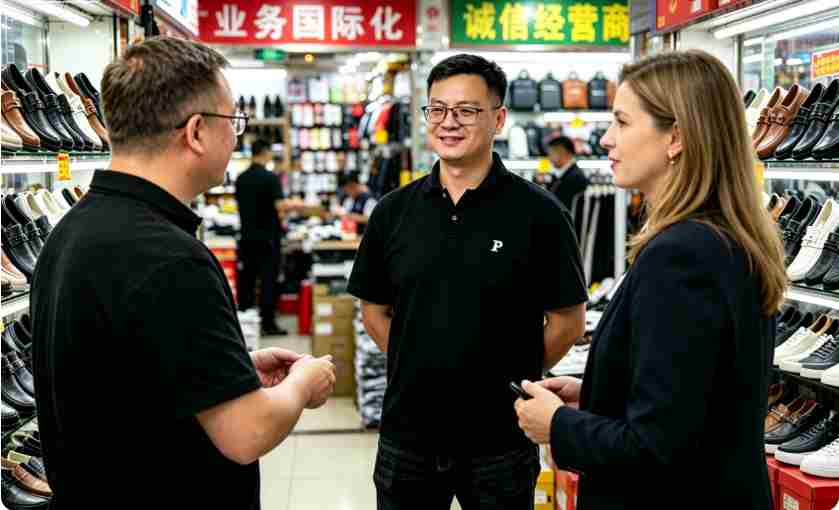
The case is even stronger for buyers who cannot travel. A Yiwu-based agent can physically walk Yiwu International Trade City (75,000+ booths) and the Canton Fair (25,000+ exhibitors) in a week — covering more suppliers in days than an overseas buyer could screen in a year of Alibaba messaging. That boots-on-the-ground speed is the single biggest reason importers hire an agent rather than buying direct.
The Sourcing Workflow: From RFQ to Delivery
A complete sourcing engagement with a competent agent follows seven phases. The timelines below are medians from our 2025 order book — your mileage will vary with product complexity, MOQ and season.
Step 1 — Submit Your RFQ (Request for Quotation)
Send the agent a detailed product brief: reference photos or engineering drawings, target MOQ (see low-MOQ options if you're starting small), target landed cost, required certifications (FDA, CE, UKCA, CPC etc.), packaging spec and destination country. The richer the brief, the fewer rounds of clarification — a vague RFQ is the #1 cause of sourcing delays. A spec'd RFQ should let the agent return a shortlist within 3–5 business days.
Step 2 — Supplier Identification (3–5 days)
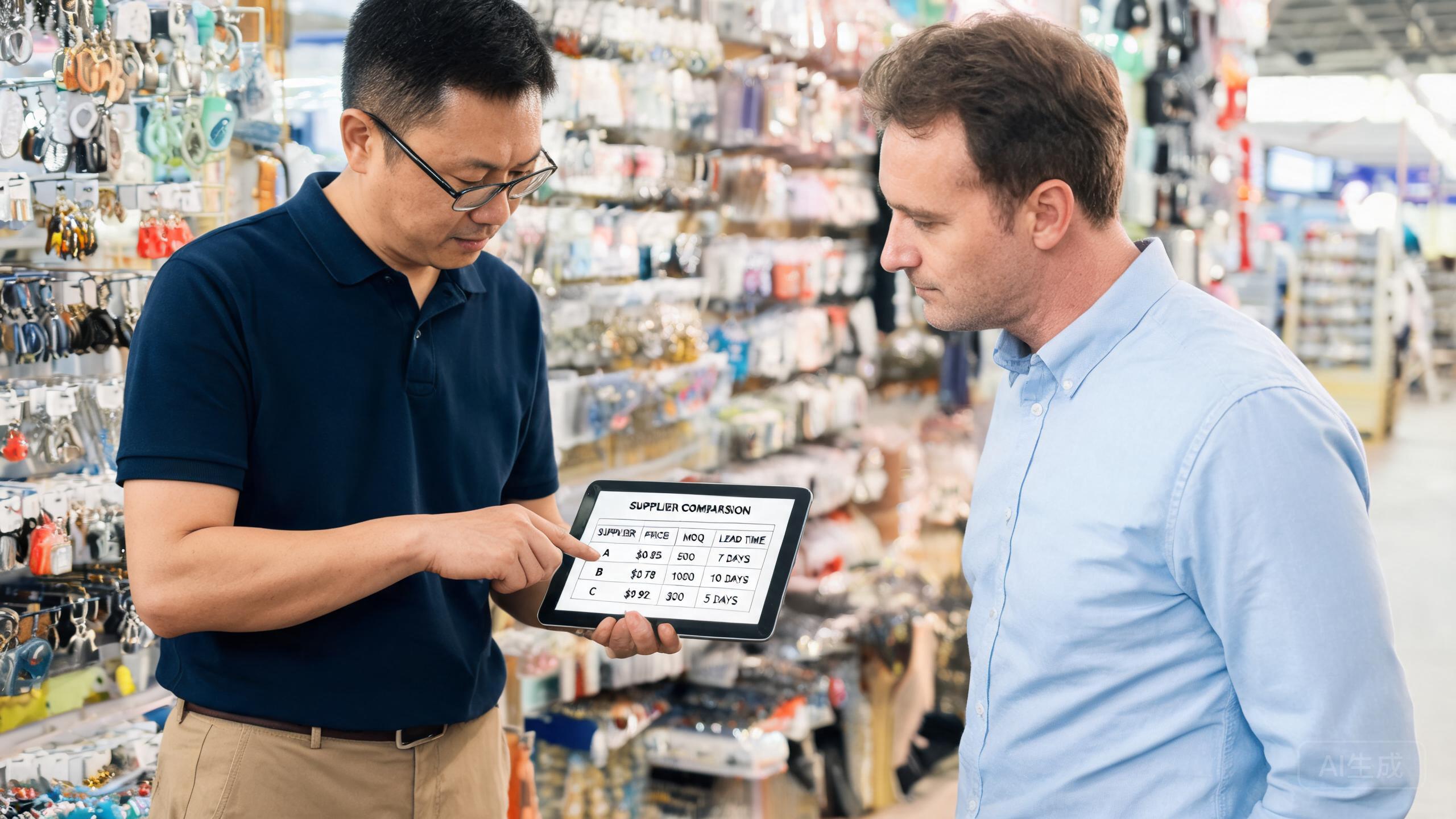
The agent searches their trusted factory network, 1688.com (the domestic-Chinese Alibaba), Yiwu market booths and trade-show databases — see our Alibaba vs trade shows comparison for sourcing effectiveness. They shortlist 3–5 factories and send you a comparison table covering ex-works price, MOQ, lead time, factory headcount, existing client markets and audit status. Never accept a single-supplier quote — without comparison you cannot tell whether the price is competitive or whether the factory is just the agent's relative.
Step 3 — Sample Approval (7–14 days)
You pick the best factory and the agent arranges sample production. Expect to pay $25–$100 per sample for shipping plus a sample fee that is usually refunded against the bulk order. The agent manages any revisions and only signs off when the sample meets your full spec — not the factory's interpretation of it. Approving a sample that is "close enough" is the most common reason bulk production arrives off-spec.
Step 4 — Production (15–60 days)
Once the sample is approved and the 30% deposit is paid, production begins. A competent agent visits the factory weekly during the run, sends photo and video updates, and flags any delay or quality drift early — when rework is still cheap. Simple consumer goods (kitchenware, accessories) typically run 15–25 days; electronics and OEM/ODM projects can run 35–60 days. Build the lead time into your RFQ timeline from the start.
Step 5 — Quality Control (1–3 days)
When production is 80–100% complete and packed, the agent's QC inspector performs a pre-shipment inspection to the AQL 2.5 standard — the same acceptance level used by most major retailers. The inspector checks workmanship, dimensions, function, labelling and carton integrity on a statistical sample, then issues a written report with photos and a pass/fail verdict. If defects exceed the acceptable limit, the agent arranges rework before the goods ship. A pass report is your green light to pay the 70% balance.
Step 6 — Export Documentation & Shipping (3–7 days for docs; 3–45 days in transit)
The agent prepares the commercial invoice, packing list, bill of lading and certificate of origin, then books sea, air or express freight. They arrange origin customs clearance and coordinate DDP delivery to your warehouse — meaning duty, taxes and last-mile are all pre-paid. Transit times run 3–7 days for express courier, 5–15 days for air freight and 25–45 days for sea freight to main ports (Los Angeles, Rotterdam, Felixstowe).
Step 7 — Delivery & After-Sales
Goods arrive, you confirm the count and condition, and the agent provides after-sales support for any in-transit or hidden defects. A professional agent will stand behind their QC verdict — if a defect that should have been caught at AQL 2.5 slips through, they help negotiate a remedy with the factory on your behalf.
How to Find China Sourcing Agents
There are four reliable channels, ranked by signal-to-noise:
- Yiwu market visit — physically walk the International Trade City; many agents have offices within 2 km of the market and welcome walk-ins. This is the highest-trust channel because you can meet face-to-face and tour their office the same day.
- Canton Fair (China Import & Export Fair) — held twice yearly in Guangzhou (spring & autumn phases). Agents attend to network with buyers; visit the service-provider zones in Area A/B. Bring a printed product brief — a serious agent will give you a same-day indicative quote.
- LinkedIn — search "China sourcing agent" filtered to location Yiwu, Guangzhou or Shenzhen. Look for profiles with client testimonials, team photos and a track record in your product category. A profile with zero team photos and no references is a one-person shop at best, a front at worst.
- Referrals — the most underused channel. Ask other importers in your niche (a Shopify/DTC peer, an Amazon FBA seller, a trade association). A referral from a satisfied buyer is worth more than any LinkedIn review.
Avoid: random "agents" in Reddit import groups, unverified WhatsApp forwards or freelance-marketplace listings. These are almost always individuals with no company registration, no QC process and no accountability if your deposit disappears.
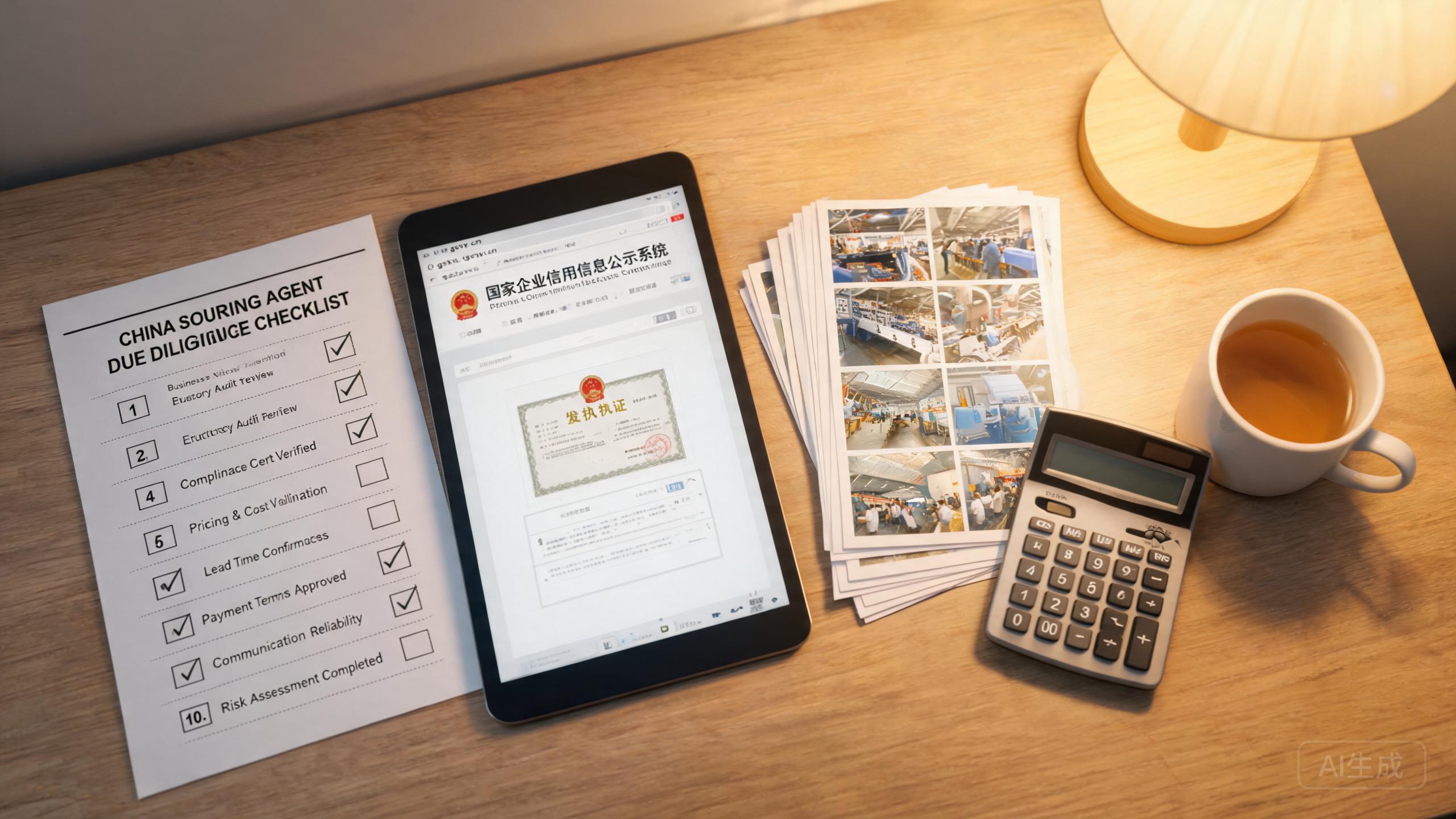
Due Diligence: 10-Point Checklist Before You Hire
Never skip these checks — together they take about 15 minutes and they separate a real agent from a middleman. Print this list.
- Business license (18-digit Unified Social Credit Code) — get the code and verify it on
gsxt.gov.cn, the National Enterprise Credit Information Publicity System. Confirm the registered address, business scope includes "import & export", and the entity is active (not deregistered). - Office location — ask for the address and arrange a video call showing the office and team. An agent in Yiwu, Guangzhou, Shenzhen or Ningbo can visit factories in hours; a "remote agent" is relying on the same Alibaba photos you already have.
- Client references — 3+ recent clients (past 6 months) in your product category. Email or call at least two. If they cannot produce references, they are not a real agent.
- Team size — ideally 5–20 people: large enough to handle your order, small enough to care. A one-person "agency" is a bottleneck; a 200-person firm may not return your calls.
- Specialization — review their website and portfolio. Do they handle products like yours? A generalist agent is fine for kitchenware; regulated categories (cosmetics, electronics, children's toys) need a specialist.
- Fee structure in writing — a written proposal with all-inclusive pricing and no hidden charges for "discovery", "express processing" or "urgent audit". Get the fee schedule before you pay anything.
- QC process — confirm they perform AQL 2.5 pre-shipment inspections and issue a written report with photos. "We check the goods for you" is not a process.
- Payment terms — standard is 30% deposit + 70% balance after QC pass, by bank transfer (T/T) to a corporate account. Run from anyone asking for 100% upfront to a personal account.
- Communication speed — send a sample RFQ and measure response time and completeness. An agent who takes 48 hours to answer a simple product question will take longer when a production defect needs fixing mid-run.
- IP & NDA — confirm they sign an NDA and that factory disclosure (sharing the real factory name and contact) is part of the service. An agent who refuses to share factory contacts after order completion is acting as a middleman, not an agent.
Negotiating Fees and Contracts
Sourcing agent fees are not fixed — you negotiate based on order volume, category complexity and the services included. The table below reflects 2026 market rates compiled from buyer surveys and our own published fee schedule.
| Order Value (USD) | Fair Commission | Common Alternative | Negotiation Tip |
|---|---|---|---|
| Under $5,000 | 6–8% | Flat $150–$250 per order | Push for the flat fee — 8% of a $2k order is $160, but a flat fee gives the agent an incentive to find a cheaper factory. |
| $5,000–$20,000 | 4–6% | 5% + $100 minimum | Agree to a lower % if you commit to a 3-month trial with monthly orders. |
| $20,000–$100,000 | 3–4% | Tiered, capped at $2,000–$3,000 | Cap the commission at a fixed dollar amount so a big order doesn't overpay. |
| Over $100,000 | 2–3% | Small retainer + 1–2% | Negotiate a hybrid: a monthly retainer plus a small % — works well for repeat buyers. |
Beyond the headline rate, ask where the agent makes money. The three classic hidden-fee spots are: (1) shipping markups — the agent quotes DDP freight at a price above the forwarder's actual rate; (2) currency conversion — quoting in USD at an unfavourable RMB rate; and (3) "factory" rebates — the factory kicks back a percentage to the agent in exchange for being chosen, which means the agent is incentivised to pick the factory that pays them, not the one that's best for you. The fix for all three: ask for the ex-works price and the freight quote as separate line items, and request the factory's proforma invoice directly.
Always get a written service agreement (2–3 pages) covering deliverables, payment schedule, factory disclosure, IP/NDA, liability cap and dispute resolution (Hong Kong arbitration is a sensible neutral venue).
Managing the Relationship
Agent relationships compound when you set clear expectations from day one:
- Provide a frozen spec upfront — changing requirements mid-production causes delays and cost overruns. Lock the spec before approving samples.
- Respond within 24 hours — your agent waits on you for decisions, just as suppliers wait on them. A 3-day reply from you can push a 30-day run into a 45-day run.
- Schedule weekly check-ins — a 15-minute video call or written WhatsApp update keeps everyone aligned during production.
- Build trust gradually — start with a small trial order, then increase volume as confidence grows. A good agent will want you to start small.
- Pay on time — suppliers value reliable buyers above almost everything else. Your agent can negotiate better terms (lower deposit, faster lead time) if you are known to pay on schedule.
Common Pitfalls and How to Avoid Them
- Spec creep — adding features or changing designs after production starts increases cost and delays. Freeze the spec before approving samples and route any change through a written change-order with a quoted price impact.
- Ignoring QC feedback — if the inspector flags issues, address them immediately. Shipping defective goods costs 3–5x more than rework once they reach your destination market (returns, refunds, reputational damage).
- Paying 100% upfront — 30% deposit is standard; 70% balance is released only after QC pass and before the bill of lading is released. Never pay 100% before production begins.
- Misunderstanding Incoterms — FOB means goods are loaded on the ship and you handle the rest; DDP means delivered to your door with duty and tax paid. Always confirm exactly what is included in the quoted price — see our DDP shipping guide.
- Not planning for customs & compliance — certain products (food, cosmetics, electronics, toys, anything for children) have product-specific import requirements (FDA, CE, UKCA, CPC). Your agent should flag these at RFQ stage, not at the port.
- Choosing on price alone — the cheapest agent is rarely the best. A 3% agent who misses a QC defect that costs you a $5,000 Amazon removal-order fee is more expensive than a 5% agent who catches it.
Worked Example: A $20,000 Silicone Kitchenware Order
To make the numbers concrete, here is a representative order from our 2025 book (figures rounded, client name withheld):
- Buyer: UK-based homeware DTC brand, first China order.
- Product: 20,000 custom-branded silicone baking mats with 4-colour printed box — see our custom packaging guide.
- Agent fee: 5% commission, capped at $1,000 (negotiated down from 6% in exchange for a 3-month trial).
- Supplier found: A factory in Dongguan, Guangdong — verified with an on-site audit (see our factory audit methodology).
- Ex-works price negotiated: $0.92/unit, down from the factory's opening $1.20 (learn the tactics in our price negotiation guide).
- QC result: AQL 2.5 pre-shipment inspection found a 1.1% minor defect rate (acceptable; industry benchmark is 2.5–3%). One carton of 50 was reworked before loading.
- DDP landed cost to London: $1.21/unit all-in (ex-works + consolidation + sea freight + duty + VAT + last-mile).
- Timeline: 8.5 weeks from initial RFQ to warehouse delivery (RFQ 4 days, supplier ID 4 days, samples 11 days, production 26 days, QC 2 days, sea freight + customs 19 days).
- Buyer's bottom line: The agent fee was $1,000; the unit-price negotiation alone saved ~$5,600 versus the opening quote, and the avoided defect rework saved an estimated $2,000 in UK-side returns. Net benefit after fee: roughly $6,600 on a $20k order.
The pattern repeats: the agent fee is a small line item, but it unlocks savings on unit price, QC and shipping that dwarf it.
Frequently Asked Questions
Do I need a sourcing agent for every order?
No. If you are testing a single product under $300 with no custom spec, buying direct from Alibaba is fine. But for any ongoing product line, custom/OEM work, or orders over $1,000, an agent is worth the investment — the savings on unit price and the cost of avoided defects typically exceed the fee on the first order.
How is a sourcing agent different from a trading company?
A sourcing agent works for you and charges a transparent fee; a trading company buys on speculation and re-sells to you at a markup, usually hiding the real factory. The quickest test: ask if they will disclose the factory name and contact after you place the order. An agent says yes; a trading company says no.
Will my agent steal my supplier contacts?
A legitimate agent will share all supplier information — it is part of the service and a key clause in any proper sourcing agreement. If an agent refuses to share factory contacts, they are acting as a middleman rather than an independent agent. Get this promise in writing before you pay a deposit.
Can I use multiple agents at the same time?
Some buyers do this to compare results on a one-off RFQ. It is fine for one-time quotes, but for ongoing production it creates confusion, duplicated factory relationships and weaker negotiating leverage. Once you find a good agent, consolidate with them — volume is how you negotiate a lower commission.
What if I already have a supplier in China?
An agent can still add value: they can independently verify the supplier's legitimacy, run third-party QC, handle export documentation, and renegotiate pricing using proven negotiation strategies — even with a supplier you already know. A common pattern is using your existing factory for production and an agent for QC and logistics only.
How long should a good agent relationship last?
Many of our clients have worked with us for 3–7 years. The longer the relationship, the more the agent knows about your quality standards, product range and business cycle — resulting in better pricing, faster problem resolution and preferential factory treatment when capacity is tight (peak season, post-CNY).
Conclusion
A China sourcing agent is your passport to importing efficiently — but only if you pick the right one. Follow the 7-step workflow, run the 10-point due diligence checklist before you hire, compare 2–3 agents on a written fee proposal, and start with a small trial order before scaling. The savings on unit price alone typically exceed the agent fee on the first order, and the avoided-defect savings dwarf it. Build a long-term relationship and your agent becomes an invaluable asset to your import business for years to come.
New to all this? Start with our introduction to what a sourcing agent actually does, then come back here to vet candidates. Ready to get a quote? Tell us about your product and we'll return a shortlist within 3–5 business days. Related: China product certifications guide.