What This Article Is About
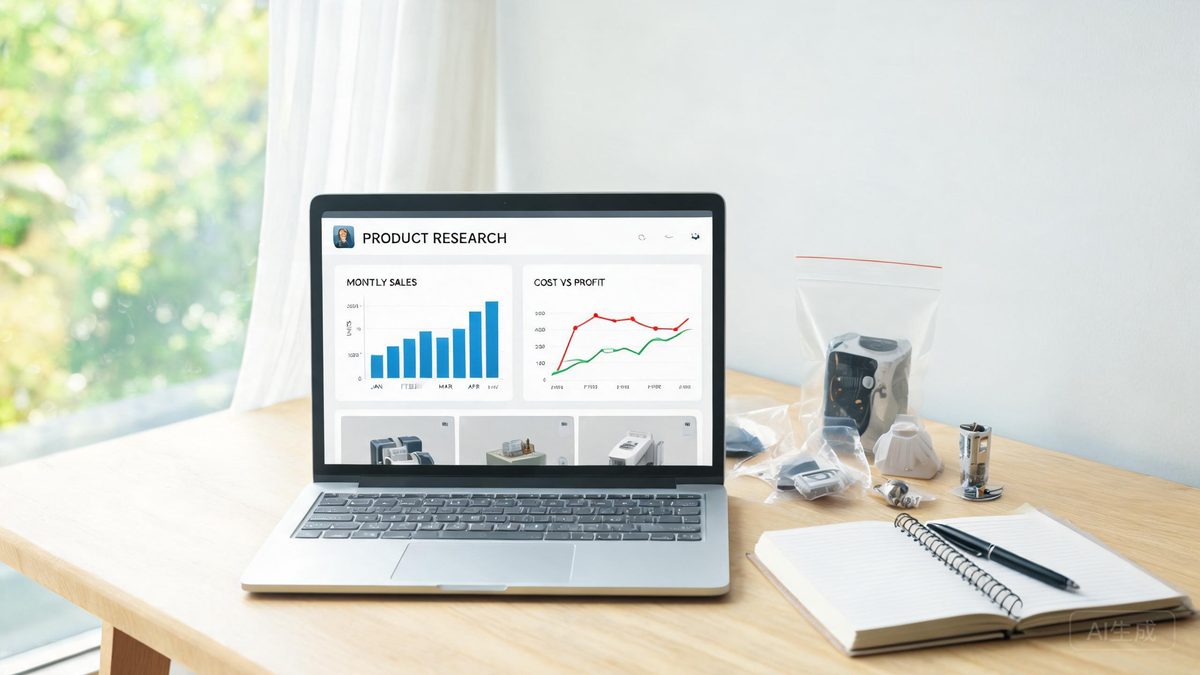
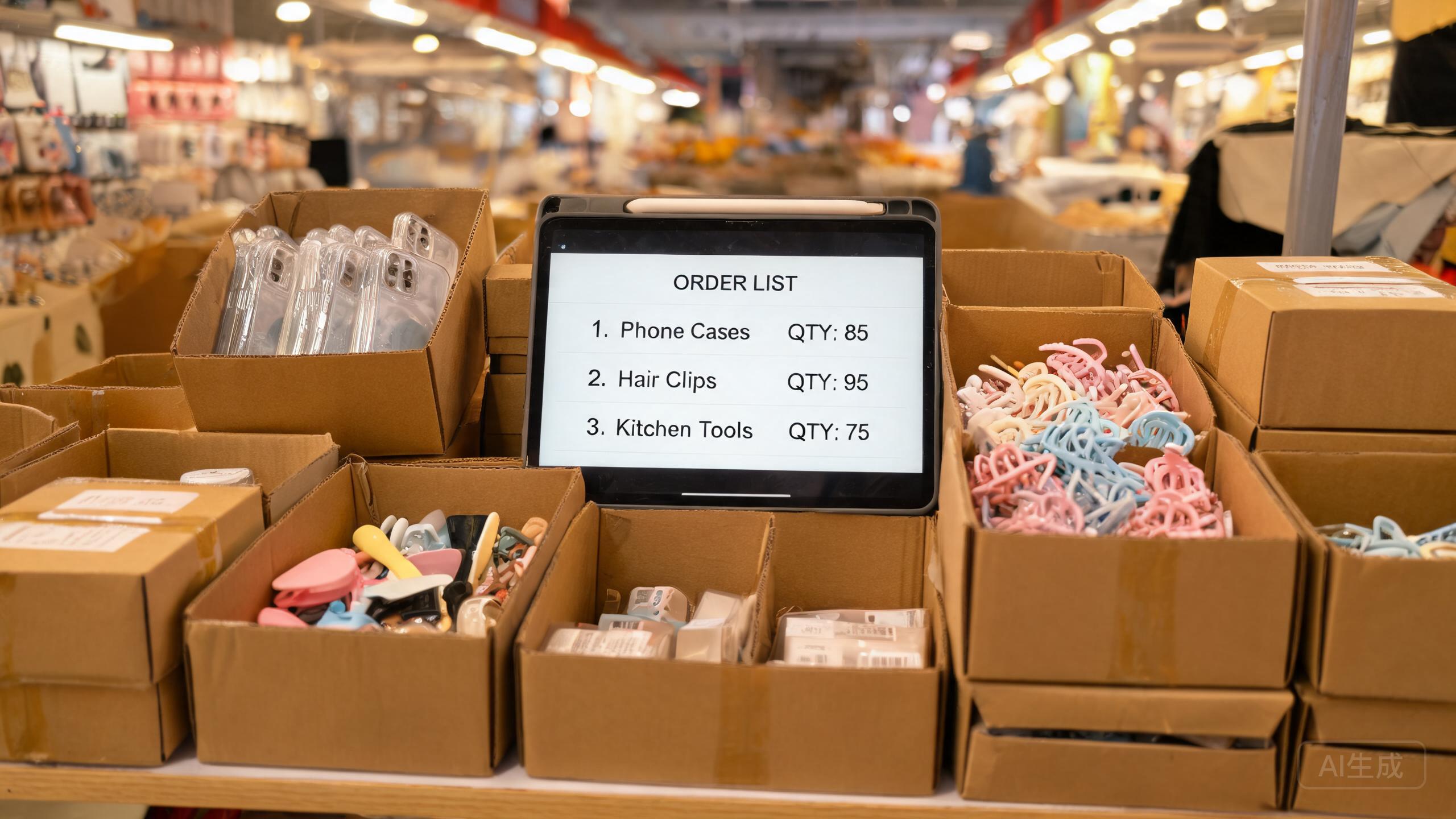
Every month, aspiring US importers message us with the same request: "Find me a product with good margins, low MOQ, and US market potential." It is a reasonable ambition, but it is the wrong starting point. A China-based sourcing partner can tell you what is manufacturable, what the factory price is, and what the MOQ will be — but we cannot decide what you should sell. That decision depends entirely on US-side market research: the retail price the market will bear, how many competitors already hold the category, what your customer acquisition cost will be, and whether the product fits your budget. This article explains the research you must complete first, why trending products are usually a trap, and how to narrow a broad category down to one specific, sourceable item. It is the honest prerequisite to FBA product research and to any first-time China sourcing effort.
Why "Find Me a Profitable Product" Is the Wrong First Question
Imagine you walk into a restaurant and say, "Cook me something delicious." The chef can do it, but the dish may be too spicy, too expensive, or not what you wanted. Product sourcing works the same way. A sourcing agent can find factories for almost anything, but "profitable" is not a product spec — it is an outcome that depends on market conditions on your side of the ocean. If we simply hand you a product that sells well in the US, three things usually go wrong:
- Competition crushes you. The products everyone already knows are hot are exactly the ones with the most established sellers, the most reviews, and the highest ad costs.
- The margin disappears. A low factory quote looks great until you add freight, duty, platform fees, returns, and advertising — the landed cost can double or triple the unit price.
- You cannot differentiate. If 50 other sellers are offering the identical item from the identical factory, your only lever is price, and that is a race to the bottom.
The right first question is not "what should I sell?" It is "what can I sell profitably, given my budget and the current US market?" Answering that requires market research, not a product recommendation.
The 7-Step Market Research Checklist
Before you approach any sourcing partner, work through these seven steps. They are the filter that separates a viable product from a money-losing guess.
- Define your target retail price range. Pick a band you can defend — for a first product, usually $15–$35. The price band dictates which categories are even possible and how much you can spend on ads.
- Calculate the full landed cost. Sum unit EXW, inland freight, ocean or air freight DDP, duty, insurance, prep/labelling, and platform fees. The landed cost, not the factory quote, decides your margin. See the landed cost calculator.
- Lock a minimum profit margin. Target 30%+ net margin after all costs. Below 15% is a commodity trap where one freight spike or price war erases your profit.
- Check category trend and seasonality. Use Google Trends, Amazon BSR history, and Keepa to confirm demand is steady or rising, not a one-season spike.
- Profile your target customer. Define age, household income, purchase occasion, and where they shop. A product with no clear buyer has no marketing plan.
- Run a competitor analysis. Study the top 10 sellers — price, review count, rating, listing quality, and brand dominance. If the top 3 hold 60%+ of sales with 1,000+ reviews each, the barrier is too high.
- Narrow to one specific item. Move from a broad category to a single, defined product. Only then can a sourcing agent find the right factory and MOQ.
Market Research Scorecard
Use this table to score any candidate. A product should pass every row before you request factory samples.
| Check | Pass threshold | Why it matters |
|---|---|---|
| Retail price range | $15–$35 for a first product | Below $15 leaves no margin for ads; above $35 needs a bigger budget and trust-building |
| Landed cost / sale price | Under 45% of retail | Leaves room for fees, ads, returns, and profit |
| Net margin | 30%+ | Buffer against freight spikes, PPC, and returns |
| Google Trends (2 yr) | Flat or rising | Rules out collapsing fads |
| Seasonality | Sells 8+ months/year | Avoids inventory stuck for half the year |
| Top-3 market share | Under 50% | Ensures the category is not brand-locked |
| Top-10 avg reviews | Under 500 | Lower barrier to enter with good listings |
| MOQ vs. budget | MOQ ≤ 40% of startup budget | Prevents tying up all capital in one order |
Why Trending Products Are Usually a Trap: The Wireless Earbuds Example
Wireless earbuds are the textbook example of a product that looks great on the surface and is brutal in practice. Demand in the US is enormous — millions of units a year — and Chinese factories make them cheaply. But look closer:
- Brand dominance. Apple, Samsung, Bose, and Anker hold the majority of sales and reviews. A new seller cannot compete on brand trust.
- Ad cost. The cost per click for earbud keywords is among the highest in consumer electronics. You can spend more on ads than you make per sale.
- Returns and warranty. Electronics have higher return rates, and buyers expect a warranty. Margins that looked fine on paper disappear after returns.
- Price compression. With dozens of no-name sellers offering the same chipset, the only differentiator is price — and someone will always go lower.
The lesson: high demand is not enough. You need demand plus a competition barrier you can overcome — a niche, a design improvement, a bundle, or a price position no one else is holding. Earbuds have the demand but not the barrier for a new entrant.
From Broad Category to Specific Item: The Pet Products Example
"Pet products" is one of the highest-potential consumer categories in the US — everyone says so. That is exactly why it is too broad to act on. Here is how you narrow it into something sourceable:
| Level | Example | Action |
|---|---|---|
| 1. Category | Pet supplies | Too broad — everyone competes here |
| 2. Sub-category | Dog feeding accessories | Still wide, but now you can check trends |
| 3. Product type | Slow-feeder dog bowls | Searchable — check demand and competition |
| 4. Specific item | Silicone slow-feeder bowl for medium breeds, BPA-free, suction base | Narrow enough to source, quote, and differentiate |
Only at level 4 can a sourcing partner do real work: find factories that make silicone slow-feeders, quote the tooling and unit price, confirm the MOQ, and arrange samples. At level 1 ("pet products"), any answer is a guess.
Worked Example: Validating the Silicone Slow-Feeder Bowl
Let us run the specific item through the 7-step checklist to see whether it is worth sourcing.
- Retail price range — comparable bowls sell for $14.99–$24.99. We target $19.99. Pass.
- Landed cost — EXW ~$2.20, DDP freight ~$0.90, duty (HS 3924, ~3%) ~$0.09, prep ~$0.20 → landed ~$3.39, 17% of retail. Pass.
- Margin — after platform fees (~15%) and a 20% ad allowance, net is roughly $9–$10/unit, about 45–50%. Pass.
- Trend — Google Trends for "slow feeder dog bowl" is steady over 3 years, rising modestly. Pass.
- Seasonality — year-round; no strong seasonal dip. Pass.
- Competition — top 10 average ~280 reviews, top 3 hold ~35% of sales. No single brand locks the keyword. Pass.
- MOQ vs. budget — Yiwu/1688 MOQ 500 units at ~$2.20 → $1,100 + freight, well within a typical first-order budget. Pass.
Decision: GO. Differentiation angle: food-grade silicone, BPA-free certified, suction base for medium breeds, branded colorway and packaging. Next steps: order samples via sample order, confirm certifications, and place a first low-MOQ production run with low-MOQ sourcing.
Red Flags: Products to Walk Away From
- Saturated brand-locked categories — wireless earbuds, phone cases, basic Bluetooth speakers. The top sellers are unbeatable for a new entrant.
- One-season spikes — a product that Googles well for 6 weeks then collapses. Check 2–3 years of trend data, not 2 months.
- Margin under 15% — freight, duty, or ad costs will wipe it out. Re-check your landed cost.
- Heavy or bulky items — freight per unit eats the margin unless the retail price is very high.
- Compliance-heavy categories — children's products, food contact, electronics, batteries need certifications and testing. Factor the cost and lead time, or avoid them for a first product. See product certifications.
- IP-encumbered designs — if the product's look or function is patented, you risk a takedown. Register your own design for private label.
What a Sourcing Partner Can — and Cannot — Do for You
Once your research has narrowed to a specific item, a good China sourcing partner becomes extremely valuable. Here is the honest split:
| We CAN do | We CANNOT do |
|---|---|
| Share current factory trends and what is being made at low MOQ | Pick your product or guarantee US demand |
| Find and verify factories for your specific item | Tell you what the US market will pay (that is your research) |
| Negotiate unit price, MOQ, and lead time | Absorb your ad, return, or platform costs |
| Run AQL 2.5 QC before shipment | Make an uncompetitive product profitable |
| Handle DDP shipping to your door | Decide your target customer or marketing plan |
The clearer your research, the sharper our work. Bring us a specific item with a target price and an MOQ budget, and we can turn it into a sourced, inspected, shipped product.
How Yeatru Helps Turn Research Into a Shipped Product
- Landed-cost modeling — real EXW, DDP freight, and duty per unit so your margin math matches reality.
- Factory sourcing — verified suppliers on Alibaba, 1688, and Yiwu at the right MOQ for your first order.
- Customization — private-label color, logo, and packaging via private label packaging and OEM customization.
- Compliance — certification checks and test reports where required.
- Quality control — AQL 2.5 pre-shipment inspection before your goods leave China.
- DDP shipping — door-to-door freight with duty included so there are no surprises.
Frequently Asked Questions
1. Can a China sourcing agent tell me what product to sell in the US?
A sourcing agent can share what is currently trending in Chinese factories and what can be made at a low MOQ, but they should not pick your product for you. The decision of what to sell depends on US-side market data — retail price, competition, ad cost, seasonality, and your target customer — that only you can validate. A good agent will help you narrow and source a product you have already researched, not guess for you.
2. Why are wireless earbuds a bad product choice for a new US seller?
Wireless earbuds have genuine demand in the US, but the market is dominated by established brands and large sellers that spend heavily on advertising. A new entrant faces high customer-acquisition cost, thin margins, and an uphill review-building fight. High demand alone does not make a product profitable; the competitive barrier matters more.
3. What margin should I target when sourcing from China for the US market?
Target at least 30% net margin after landed cost (EXW + freight DDP + duty + prep) and platform/ad costs. Below 30% leaves no buffer for PPC, returns, and freight spikes; below 15% is a commodity trap. Use a landed cost calculator before you commit to a factory.
4. Is it enough to say I want to sell pet products?
No. "Pet products" is far too broad. Everyone knows pet supplies is a high-potential US category, but you must narrow to a specific item — for example, a silicone slow-feeder bowl for medium dogs — before you can research price, competition, and sourcing feasibility. Broad categories hide the detail that decides profit.
5. How do I check if a product's demand is real and not a trend spike?
Use Google Trends for 2–3 years of search history, Keepa for Amazon BSR and price history, and review-velocity data from Helium 10 or Jungle Scout. Steady or rising demand over 12+ months is real; a 6-week spike that collapses is a trend you should avoid.
6. What is the right MOQ for a first product from China?
For a first product, aim for an MOQ you can sell through in 60–90 days, typically 300–1,000 units depending on the category. A MOQ that ties up more than 40% of your startup budget is too high. Many Yiwu and 1688 factories offer low-MOQ options for first orders to validate demand.
Common Pitfalls to Avoid
- Accepting a flat DDP rate without line items. A real DDP quote breaks out freight, duty, VAT, clearance, and last-mile. A single per-kg number hides costs that surface as surprise invoices or low-quality service.
- Choosing CIF for control of freight. Under CIF the supplier picks the carrier and inflates freight by 15–25%. Choose FOB (you control the line) or DDP (all-in, your forwarder) — never CIF unless you have no other option.
- No transit-time buffer for FBA restocks. Sea freight from China runs 25–40 days + 5–7 days FBA receiving. Order 45–60 days before you need stock in FBA, not 30. Running out of stock kills your Amazon ranking.
- Ignoring ISPM-15 for wooden pallets. EU and US customs require heat-treated pallets with the IPPC stamp. Missing stamps = container detained, €400–$600 fumigation, 3–7 day delay.
- No cargo insurance. Freight forwarders' liability is limited to ~$2/kg by convention. For high-value cargo, buy separate all-risks insurance (0.3–0.5% of value) — it costs $50 and pays out $10,000.
Conclusion
The most common mistake new US importers make is asking a sourcing partner to choose their product. A China factory can make almost anything cheaply, but "cheap to make" is not the same as "profitable to sell." Before you request a single quote, complete the 7-step market research: define your retail price band, calculate the full landed cost, lock a 30%+ margin, confirm a steady trend, check seasonality, profile your customer, and analyze the top competitors. Then narrow from a broad category down to one specific item — the point where a sourcing agent can actually help. Trending products like wireless earbuds look attractive but trap new sellers in high ad costs and brand dominance; the right product is the one where demand meets a competition barrier you can overcome. Get a free sourcing quote from Yeatru once your research is done — we will model your landed cost, source the right factory at the right MOQ, and run AQL 2.5 QC before your shipment leaves China. Related: Incoterms EXW/FOB/DDP comparison, DDP door-to-door shipping guide, China warehousing & consolidation.